The global plastics and polymer industries rely heavily on masterbatch formulations to provide consistent coloration and additive performance in the final products. Masterbatches are solid or liquid additives used to impart color or enhance specific properties in plastics, including UV resistance, flame retardance, and anti-static behavior. As global demand for high-performance plastics continues to rise across automotive, consumer goods, packaging, agriculture, and electronics sectors, understanding the Masterbatch Production Cost becomes imperative for manufacturers, suppliers, and procurement managers alike.
This article explores the Masterbatch Production Cost Analysis Report, which provides a comprehensive assessment of production costs, cost structures, labor charges, utility expenses, manufacturing processes, and key trends shaping the global masterbatch market. The report, developed by Procurement Resource, offers actionable insights and detailed metrics for companies seeking to optimize costs, assess market feasibility, and gain a competitive edge in the global plastics industry.
Product Overview: What is Masterbatch?
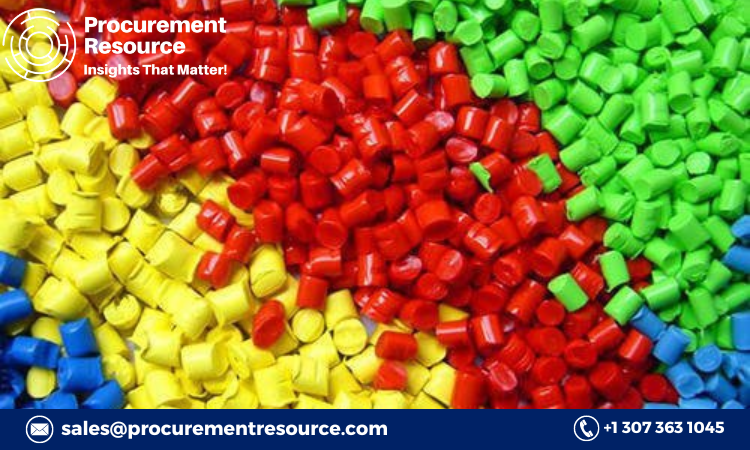
Masterbatch is a concentrated mixture of pigments and/or additives encapsulated during a heat process into a carrier resin. This master mixture is then cooled and cut into granules or pellets, which can be directly added to raw polymers during the manufacturing process. The key benefit of using masterbatch over direct coloring is better dispersion, consistency, and cleanliness during processing.
Masterbatches are generally categorized into:
- Color Masterbatch – Used to provide specific colors to plastic products.
- Additive Masterbatch – Includes UV stabilizers, flame retardants, antistatic agents, anti-blocking agents, etc.
- Filler Masterbatch – Comprises CaCO₃ or talc to reduce cost and improve performance.
- White and Black Masterbatches – Contain titanium dioxide or carbon black respectively.
Masterbatch Production Cost Analysis: Key Components
Understanding the Masterbatch Production Cost involves breaking down various cost elements involved in the entire production chain, from raw materials to packaging and logistics. Below is a detailed examination of each component as included in the cost analysis report:
1. Raw Materials Cost
Raw materials are the most significant contributor to the overall production cost. Common materials include:
- Carrier resins (e.g., polyethylene, polypropylene)
- Pigments (organic/inorganic)
- Additives (UV stabilizers, antioxidants, slip agents)
- Fillers (e.g., calcium carbonate)
Volatility in crude oil prices directly impacts the cost of synthetic polymers and pigments. Therefore, procurement strategies must be aligned with commodity market fluctuations.
2. Manufacturing Process and Utilities
The manufacturing process of masterbatch generally follows the steps below:
- Premixing raw materials
- Extrusion and compounding
- Cooling
- Pelletizing
- Drying and packaging
Utility costs (electricity, water, and compressed air) form a vital portion of the operational expenses. Energy-efficient extrusion systems and optimized processing parameters are essential for lowering utility consumption.
3. Labor Charges
Labor costs vary significantly depending on regional wage structures, automation levels, and labor laws. The report outlines wage expectations and productivity benchmarks across major masterbatch manufacturing regions, including China, India, Europe, and the United States.
4. Logistics and Supply Chain
Transportation of raw materials and finished masterbatches plays a critical role in overall costs. Fuel prices, port handling charges, and supply chain disruptions—like those experienced during COVID-19 – can lead to substantial price variations. Efficient warehouse management and strategic sourcing can reduce these costs.
5. Packaging Costs
Masterbatch is typically packed in 25 kg bags or jumbo bags for industrial supply. Packaging materials, printing, and handling add up to a non-negligible portion of total production costs.
Industrial Trends Driving Masterbatch Market
The masterbatch industry is undergoing rapid transformation due to evolving end-user demand, environmental considerations, and technological advancements. Some of the key industrial trends covered in the report include:
- Sustainability Focus: Demand for biodegradable and recyclable masterbatches is rising.
- Innovation in Additives: Introduction of nanomaterials and specialty additives to enhance performance.
- Automation and Industry 4.0: Smart manufacturing units are improving productivity and consistency.
- Growth in Emerging Economies: Rising plastic consumption in Asia-Pacific and Latin America drives new capacity installations.
- Stringent Regulations: Regulatory frameworks around food safety, REACH compliance, and environmental impact require continuous product reformulation.
Regional Insights and Cost Variability
The Masterbatch Production Cost varies across key production hubs:
- Asia-Pacific (China, India): Competitive labor rates, localized raw material availability, and expanding plastic processing sectors make this region the most cost-effective for masterbatch production.
- Europe: Higher labor and energy costs offset by innovation and premium quality masterbatches.
- North America: Balanced cost structure with efficient logistics and high domestic polymer consumption.
The report includes regional benchmarking data for cost analysis, helping businesses understand how their production facilities compare globally.
Extensive Forecast and Cost Modeling
The cost model developed by Procurement Resource includes:
- Capital Expenditure (CAPEX)
- Operational Expenditure (OPEX)
- Cost per unit (USD/ton)
- Break-even analysis
- Profit margin estimates
- Sensitivity analysis on raw materials and utility prices
This detailed forecasting enables manufacturers and investors to assess the economic feasibility of setting up a masterbatch plant or expanding existing capacities.
Procurement and Strategic Recommendations
Companies looking to gain efficiency and reduce procurement risk can benefit significantly from:
- Long-term raw material contracts to hedge against price volatility.
- Technology partnerships to adopt energy-efficient production.
- Strategic location selection for new facilities to reduce logistics costs.
- Regular benchmarking with global peers using the Procurement Resource database.
Procurement Resource’s database offers access to real-time production cost data, historical trends, and predictive modeling, making it a critical asset for decision-makers in the plastics sector.
Product Details and Applications
The masterbatch market serves a wide range of applications:
- Packaging – Flexible and rigid plastics for food, pharmaceuticals, and industrial goods
- Automotive – Interior trims, panels, and under-the-hood components
- Consumer Goods – Toys, appliances, containers
- Textiles and Nonwovens – Fiber coloration and performance enhancement
- Agriculture – UV-stabilized films, irrigation pipes, and greenhouse covers
Tailoring masterbatches to specific application requirements adds value and enhances product differentiation in competitive markets.
Request a Free Sample
To gain a deeper understanding of the Masterbatch Production Cost, access detailed data sets, and explore customized solutions for your organization:
Request a free sample of the Masterbatch Production Cost Analysis Report: https://www.procurementresource.com/production-cost-report-store/masterbatch/request-sample
The sample report includes:
- Executive summary
- Cost component breakdown
- Regional pricing analysis
- Forecasting models
- Industrial applications overview
Whether you’re planning a new manufacturing unit or optimizing your procurement strategy, this report provides critical intelligence for effective decision-making.
Understanding the Masterbatch Production Cost and its influencing parameters – from raw materials and utilities to labor and logistics – enables companies to streamline operations, reduce waste, and maximize profitability. With rising global demand and increasingly stringent quality requirements, businesses must stay informed and agile. The cost analysis report by Procurement Resource offers a reliable framework to guide strategic investments and operational improvements across the masterbatch value chain.
Contact Information
Company Name: Procurement Resource
Contact Person: Ashish Sharma (Sales Representative)
Email: sales@procurementresource.com
Location: 30 North Gould Street, Sheridan, WY 82801, USA
Phone:
UK: +44 7537171117
USA: +1 307 363 1045
Asia-Pacific (APAC): +91 8850629517